One potato. Two pans. A fridge full of leftovers and exactly forty minutes before everyone starts asking what’s for dinner. That’s the moment this ground beef and potato casserole was born for. It’s the kind of meal you throw together on a Tuesday, not a project you save for a weekend. You don’t need a culinary degree, a pantry full of exotic spices, or even a proper casserole dish. You just need a skillet, some ground beef, a few potatoes, and cheese that melts into every single crevice.
I’ve made this recipe more times than I can count, and it never gets old. The golden, glossy potatoes catch the savory beef juices, the melted cheese stretches when you pull a fork through it, and the fresh chives on top cut through all that richness. It’s comfort food that actually delivers, not just in theory but on the plate in front of you. If you’ve never cooked a real meal from scratch, this is a perfect place to start.
## What You Need for This Cast Iron Skillet Recipe
Look, I’m a big believer in using what you have. If you own a cast iron skillet, great, drag it out. If you don’t, any heavy bottomed oven-safe pan will work, though honestly the cast iron does something special to those potatoes. The heat distribution is just better, and the crust that forms on the edges is worth the extra weight.
For this casserole, you’ll need these basics:
– 1.5 pounds of ground beef (85% lean is a good choice, not too greasy, not too dry)
– 4 medium russet potatoes, diced into half-inch cubes
– 1 yellow onion, chopped
– 3 garlic cloves, minced
– 1 can of diced tomatoes with their juice
– 2 cups of shredded cheddar cheese (sharp cheddar especially)
– Salt, black pepper, paprika, and a pinch of dried thyme
– Fresh chives for the top, finely chopped
That’s it. No secret ingredients, no specialty items from a niche grocery store. You might already have most of this sitting in your fridge right now. The potatoes need a little prep time, so give them a good scrub and dice them evenly. Uneven pieces mean some will be hard while others turn to mush, so take the extra two minutes to make them uniform.
## One Skillet, One Meal: Why Cast Iron Works Better
Here’s the thing about ground beef and potato casserole, it’s a dish that wants to be cooked in layers of flavor. A skillet gives you that. You brown the beef first and leave those tasty browned bits stuck to the bottom of the pan. Those bits, the fond, are pure flavor and they’ll season the entire dish as the potatoes cook down.
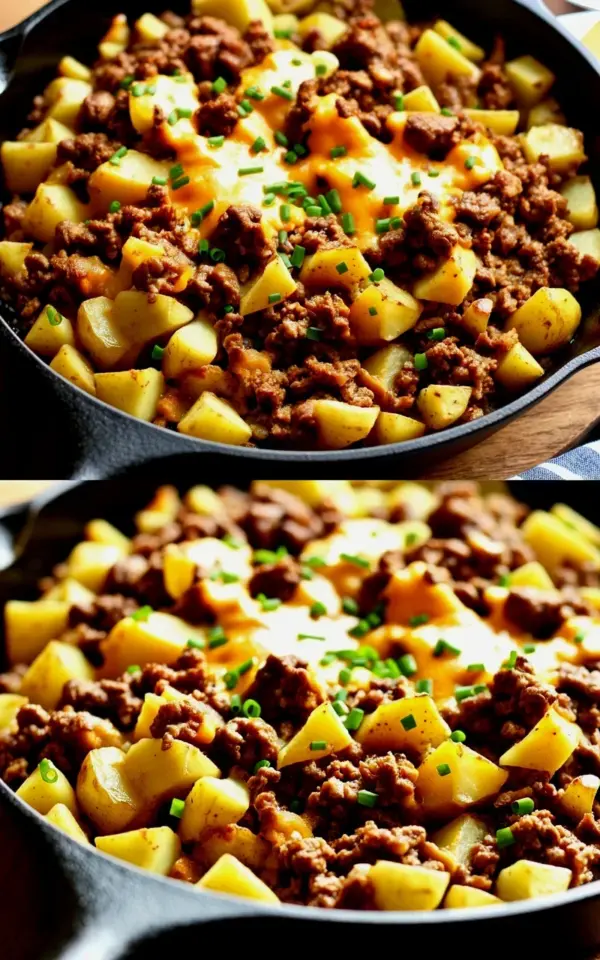
A deep cast iron skillet is ideal because it holds heat so well. You can start it on the stovetop for the searing and browning stages, then move it straight into the oven to let everything bubble together. You dirty one pan. That means less washing up, which is honestly one of the best parts of this recipe. The potatoes get that glossy sheen you see in the photo because they’re cooking in the beef fat and tomato juices, absorbing all that savory goodness instead of just steaming in water.
If you don’t have cast iron, use a stainless steel skillet or an enameled Dutch oven. Avoid nonstick if you can, it just doesn’t create the same depth of color on the potatoes. And whatever you do, make sure the pan is oven safe before you slide it under the broiler. Handle with a towel, that iron gets seriously hot.
## How to Make Ground Beef and Potato Casserole, Step by Step
Ok so this is the part that can trip people up, especially beginners. The order of operations. You don’t just dump everything in a pan and hope for the best. You layer the cooking so each ingredient actually performs.
Start by preheating your oven to 375°F. Then dice your potatoes and set them in a bowl of cold water to release some of the starch. Drain and pat them dry before cooking. Wet potatoes won’t brown, they’ll just steam and turn pale.
While that’s happening, heat your skillet over medium-high heat and add the ground beef. Break it up with a wooden spoon and let it cook until it’s nicely browned, about 8 minutes. Once it’s brown, use a slotted spoon to scoop it onto a plate. Leave the drippings in the pan, those are pure flavor. Add the diced onions to those drippings and cook them until they’re soft and translucent, about 4 minutes. Throw in the garlic for the last 30 seconds and stir constantly so it doesn’t burn.
## Building the Casserole Layer by Layer
Now comes the fun part, putting it all together. Add your drained potatoes to the skillet with the onions and garlic. Sprinkle them with salt, pepper, paprika, and thyme, then stir to coat every cube in the drippings. Let them cook uncovered for about 5 minutes, just to get some color on the edges.
Pour in the can of diced tomatoes and scrape the bottom of the skillet to lift all those browned bits. Return the beef to the pan and give everything a good stir. Spread the mixture out into an even layer. Note that the potatoes need liquid to cook through, and the tomatoes provide that. If you’re using fresh tomatoes instead, add a splash of beef broth to compensate.
Place the skillet in the oven uncovered and let it bake for about 25 minutes. The potatoes should be fork tender by then. This is the part where you can see for yourself why this is pure comfort food, the whole kitchen smells like dinner, and there’s a glossy sheen on everything from the cooking liquid.
Once the potatoes are tender, pull the skillet out and crank the oven to broil. This is the moment for the cheese.
## Cheese, Broiling, and the Fresh Finish
Sprinkle the shredded cheddar generously over the top of the entire skillet. Don’t be shy with it. You want full coverage, not scattered islands of cheese. Slide the skillet back under the broiler for about 3 to 4 minutes. Watch it closely, ovens vary and broilers work fast. The goal is a bubbly, golden top with slightly darker spots in a few places.
Remove the skillet from the oven and let it rest for a solid 5 minutes. I know you’ll want to dig in immediately. Let it wait anyway. This resting time lets the liquid settle back into the potatoes instead of pooling on your plate. It also means you won’t burn your mouth on molten cheese.
Just before you serve it, scatter those finely chopped fresh chives all over the melted cheese. You can see exactly how this looks in the photo, bright green against the golden brown, and that contrast isn’t just for looks. The chives add a mild onion pop that brightens the whole heavy dish. Something warmer about ground beef casserole, it’s a dense meal. The fresh herbs prevent it from feeling too heavy.
## Easy Variations and Substitutions to Try
You’ve now made the base recipe, and honestly it’s perfect as written. But you’ll probably make this again, so here are some ways to switch it up based on what’s in your fridge. I’ve tried almost all of these and they work.
– Swap the ground beef for ground turkey or pork sausage
– Use frozen diced hash browns to save prep time, but note the texture is a bit different
– Add a layer of frozen peas or green beans on top before the cheese
– Substitute Colby Jack or mozzarella for a milder melt
– Give it a kick with a teaspoon of chili powder or a few dashes of hot sauce in the beef
One thing I have to mention, if you use frozen potatoes, reduce the baking time because they cook faster than fresh ones. And if you want a crispier crust on top, use less tomato and a little extra cheese. Some folks like to crumble bacon over the chives at the end, which is monstrous but delicious. I tried that once on a cold Sunday, and it ruined regular casserole for me for weeks.
I’ll add a rambling aside here, don’t feel obligated to use russet potatoes specifically. Yukon golds are my go-to because they hold their shape so beautifully and have that buttery interior. The texture difference is subtle but real. Red potatoes work too, they just give you a softer bite. I’ve honestly used whatever was sitting in the pantry, and it’s always turned out fine.
## Storing Leftovers and Reheating Tips
This ground beef and potato casserole makes fantastic leftovers, and not gonna lie, I might like it even better the next day. The flavors have a chance to meld together in the fridge, so the second round tastes deeper and more integrated. Store whatever you don’t finish in an airtight container for up to 4 days.
When it comes to reheating, here’s the trick, avoid the microwave if you can. The microwave makes the potatoes rubbery and the cheese chewy. It works in a pinch, but it’s nothing special. Instead, reheat individual portions in a small skillet over medium-low heat with a lid on. Put a splash of water in the pan, cover it, and let the steam bring everything back to life. The cheese will melt again and the potatoes will regain some of their original texture.
You can also reheat the whole skillet in the oven at 300°F for about 15 minutes if you have a larger crowd to feed. Add a quick sprinkle of fresh chives after reheating to bring back that fresh, bright touch.
## Why This Ground Beef and Potato Casserole Wins Weeknights
The best recipes aren’t the complicated ones with a dozen steps and ingredients that cost a fortune. The best ones are the ones you can make without thinking too hard. This is that recipe. One skillet, basic ingredients, and a result that makes everyone ask for seconds.
It’s also forgiving. If you don’t have the exact measurements, the dish still works. If you overcook it by five minutes, it’s still good. If you use a different cheese, you’re fine. There aren’t many recipes that give you that kind of freedom, and that’s what makes this such a great starting point for beginners. You learn the basic technique, boiling, browning, baking, and you get a payoff that feels way more accomplished than the effort required.
I hope you give this one a shot. Grab your skillet, dice a few potatoes, and let that beef sizzle. When it comes out of the oven with the cheese melted and the chives scattered over the top, you’ll see exactly what I mean. Save this for your next cozy meal, and let me know how it turns out for you.
Leave a Comment