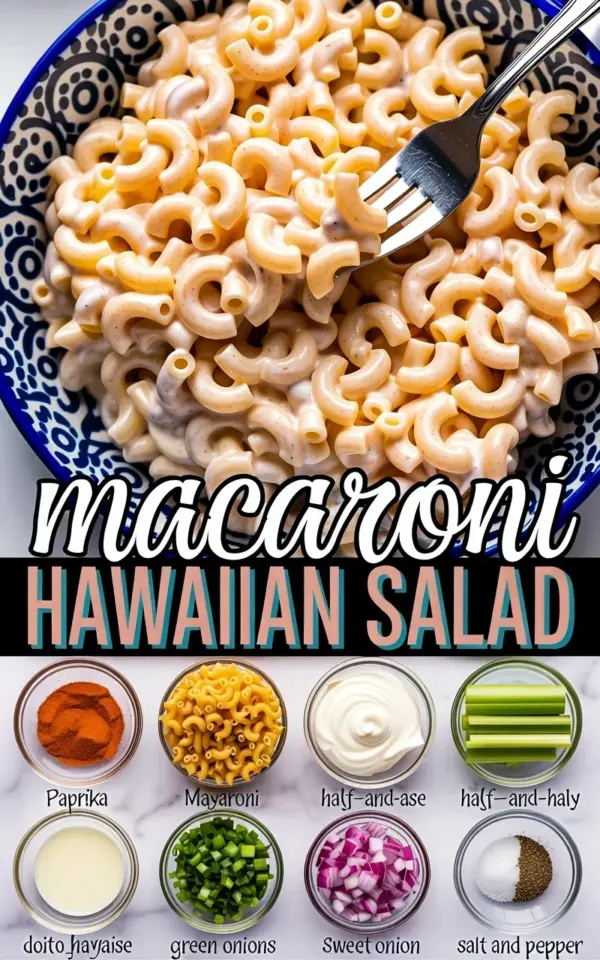
Look, if you’re reading this, there’s a decent chance you just googled “Hawaiian macaroni salad” because your plate lunch obsession has reached critical mass. Or maybe you’re staring down a family BBQ and you’re tired of the same sad, watery pasta salad from the grocery store. Either way, you landed in the right spot because I have very strong opinions about this specific side dish. The kind of mac salad you get next to a mountain of kalua pork or a teriyaki chicken plate is a whole different beast from the mustardy, dill-pickled version your Midwestern aunt brings to every gathering. It’s creamy, it’s tangy, and it clings to the pasta like it’s got nowhere else to be.
That said, the internet is full of recipes that will lead you straight to a gummy, congealed mess. The single biggest mistake I see? Pouring that beautiful, tangy dressing over piping hot macaroni. Your dressing will seize up, the starches will panic, and you’ll end up with a bowl of glue that vaguely resembles food. It’s a tragedy, honestly. So let’s fix it, step by step, and build a bowl of Hawaiian macaroni salad that actually does the name justice.
Why Temperature Matters So Much in Hawaiian Macaroni Salad
Think about what happens when you make regular gravy or a roux. Heat activates starches. Pasta is essentially a starch delivery system, and when it’s hot, it’s releasing those starches like crazy. If you dump a cold, creamy dressing onto that piping hot elbow, the dressing absorbs all that released starch.
And suddenly, you’ve got a texture problem. The sauce isn’t silky anymore; it’s gummy, almost like paste. It doesn’t coat the noodle, it just clumps on top and turns into a weird, sticky film. The fix is so simple it almost hurts: cook your pasta, drain it, and let it cool completely. Yes, completely, which is harder than it sounds when you’re hungry.
Some people rinse the macaroni under cold water to speed this up. I get it, but I’m not a huge fan because you wash away the little bit of exterior starch that helps the dressing cling to the noodle in that way you want. Honestly, I usually just spread the cooked elbows on a sheet pan in a single layer for about twenty minutes. Patience pays off here.
The Tangy Orange Dressing Is the Real Star
The secret to that iconic, slightly orange-colored dressing isn’t some exotic spice blend. It’s a combination of best foods (or Hellmann’s, depending on your ZIP code, but let’s not fight about it) and something acidic. The classic plate lunch version is heavy on the mayo, but the cool thing is the acid cuts through that richness.
You want a dressing that’s aggressively creamy but has a sharp, tangy bite that hits the back of your jaw. Vinegar is the standard move, and honestly, apple cider vinegar gives it a nice, slightly fruity note that plain distilled white vinegar doesn’t. I also know a few people who swear by a spoonful of sweet pickle relish for that sweetness and crunch, which is a legit move if you’re feeling adventurous.
But here’s the thing: don’t just whisk the wet ingredients together and call it a day. Season the dressing aggressively before you even think about adding the pasta. You’re seasoning a big bowl of cold food, and cold dulls your perception of salt and acid. If it tastes perfect at the bowl stage, it’ll taste a little flat after a night in the fridge.
Your Step-by-Step Guide to a Silky, Non-Gummy Bowl
Alright, let’s get into the actual process. This is where we build the texture that makes people ask for the recipe. The steps aren’t hard, but they’re specific, and skipping one is how you end up with a disappointing side dish.
1. **Boil the elbows hard.** Use a big pot of well-salted water, like a handful of salt. It should taste like the ocean, honest. Boil the family size bag of elbow macaroni for one minute or two less than the package says. You want it tender but with a slight bite, because you’re going to dress it and let it sit.
2. **Drain and cool flat.** Drain immediately and spread the macaroni in a single layer on a parchment-lined baking sheet. This is the step nobody does, and it’s the reason their salad is gummy. Let it cool for at least 20 to 30 minutes. It should be room temperature, maybe even slightly cool to the touch.
3. **Whisk the dressing separately.** While the pasta cools, mix your dressing in a large bowl. Mayo, your vinegar, a pinch of sugar to balance the tang, black pepper, and a little milk (maybe two tablespoons) to thin it out just enough so it doesn’t sit on the pasta like a heavy paste.
4. **Fold, don’t stir.** When the macaroni is cool, pour the dressing over it. Use a spatula to fold it gently, scraping the bottom of the bowl to get everything evenly coated. You’re not trying to work the dressing into the pasta, you’re trying to lightly coat it.
How to Get That Classic Orange Color (Without Fake Food Dye)
You’ll notice the photo here shows a visually distinct, creamy orange-colored dressing. It’s almost a pale sunset hue, and it’s part of the charm. Is it just the paprika? Honestly, no. A heavy hand with plain paprika adds a lot of color, but the real trick for that specific look is a tiny pinch of turmeric dissolved in a splash of warm water.
It sounds weird, I know. Turmeric in macaroni salad? But it adds a mellow, earthy color that mimics what you see at the local plate lunch spots. It doesn’t really taste like much at the small amount you add, but it transforms the color of the mayo from stark white to a warm, appetizing golden shade. It’s a total back-pocket secret that changes the whole game.
Plus, you get that final sprinkle of paprika on top right before serving. It looks classic, but it also adds a tiny bit of smoky aroma when you dig your fork in. It’s the kind of detail that makes people think you labored for hours, when in reality, you just shook some spices into a bowl.
The Magic of Chilling Overnight (Yes, You Have to Wait)
Here’s where the discipline comes in. You’re going to taste the salad right after you make it, and you’re going to think, “Okay, this is good.” And then you’ll put it in the fridge. But tomorrow? Tomorrow it’s a whole different animal. Seriously.
The flavor melds overnight. The mayo sinks into the pasta a little bit, the tanginess of the vinegar mellowes and spreads out, and the texture becomes this cohesive, creamy perfection that takes over your whole mouth. It’s not a coincidence that the best mac salads in the world come from places that batch them a day in advance. It’s a necessary step, not a suggestion.
When you pull it out to serve, it’ll be thick, almost set, because the cheese will likely be cold (and here’s a secret: no cheese is traditional, just mayo). If it feels too stiff after chilling, stir in a tiny splash of milk or water to loosen it up. You want it spoonable and glossy, not dense and brick-like.
What to Serve With Your Homemade Macaroni Salad
This salad is a side dish, but it’s the side dish that grounds the whole meal. It’s the cool, creamy counterpoint to all the salty, smoky, main-event proteins.
– **Grilled meats:** You can’t beat it next to a juicy teriyaki chicken thigh or a couple of charred short ribs. The smokiness of the grill and the cold salad is a match made in heaven.
– **Pulled pork:** A scoop of this is basically mandatory on a Hawaiian plate. It cools down the richness of the pork and all the BBQ sauce.
– **Hot dogs or burgers:** Look, it’s the perfect BBQ side dish for a reason. It’s easier than potato salad and somehow more comforting.
It’s also great on its own as a quick lunch with a little leftover chicken flaked on top. Not that I’ve ever done that. Okay, I have, and it was fantastic.
So there you go. You’ve got the knowledge and the exact steps to avoid the gummy pasta tragedy that ruins so many BBQs. The key is just to be patient, let the macaroni cool completely before you dress it, and don’t skimp on chilling time. Make this for your next gathering, watch it disappear, and enjoy all the “who made the mac salad? who made this?” comments. You can save this one for later and have the whole process memorized by the time your friends text you asking where they can get the recipe.
Leave a Comment