Look, I have ruined more pans of crispy roasted potato balls than I care to share publicly. The first few batches came out pale, dense, and borderline sad. Then I figured out the one mistake that was wrecking every single attempt. It wasn’t the oil, the oven temperature, or even the potato variety. It was how I jamming every last ball onto the tray like they were all heading to a sold-out concert.
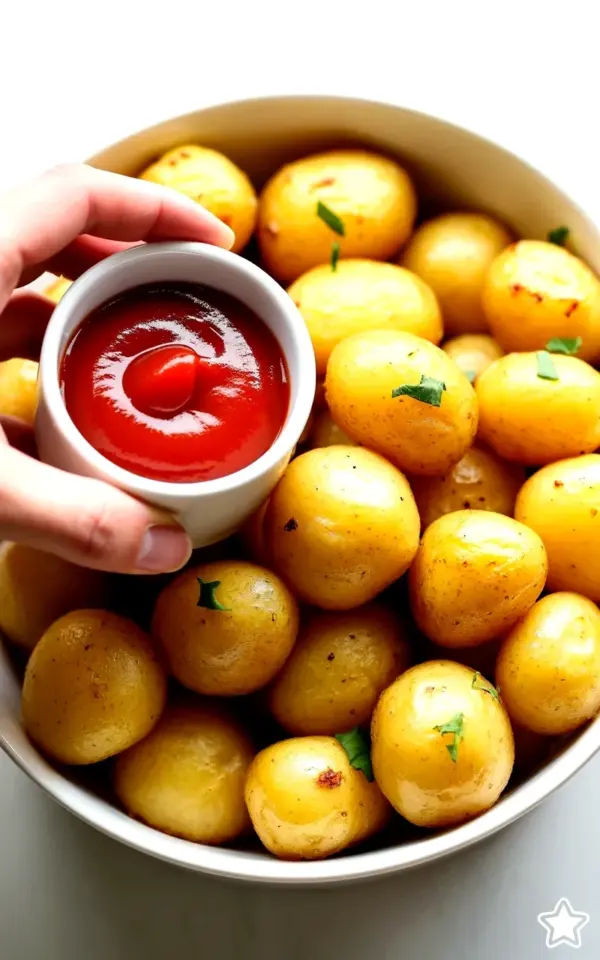
Here’s the truth: roasted potato balls need personal space. Honestly, that advice sounds so simple it barely feels like cooking wisdom. But crowd them together, and you’re basically steaming them instead of roasting them. Steam plus potato equals soft and floppy. Roasting plus space equals golden, crunchy, and exactly what that photo shows. The one with the white ceramic bowl, the fresh herbs scattered across the top, and a little cup of ketchup being dipped in from the left. That image is not the result of a secret technique. It is the result of restraint.
The Mistake That Keeps Your Potato Balls Soft
Overcrowding is the problem, but here’s what happens on a physical level. When potato balls sit too close together, they release moisture as they heat up. That moisture has nowhere to go. Instead of evaporating and leaving the surface dry, it condenses between the potatoes and turns the whole tray into a makeshift sauna. Your oven is doing its job. You just aren’t letting it.
I know this because I spent a solid two months producing tray after tray of sad, waxy orbs. My partner would politely say they were fine. My dog would eat them off the floor, which frankly isn’t a glowing review since that dog once ate a beetle. So trust me, this mistake is real. It’s the difference between potato balls that crunch and potato balls that feel like dense dough.
Give Them Room: The Simple Fix That Works
So what does giving them room actually mean? Each potato ball should have a small gap on every side. If they’re touching, that’s too many. A good rule of thumb: spread them so you can see a tiny sliver of the pan between them. That sliver is where the hot air does its magic.
For a standard baking sheet, that usually means around 20 to 25 small potato balls, not the entire contents of your grocery bag. I know it’s tempting to cook them all at once because we’re all busy and nobody wants two rounds. But look, two batches beat one batch of disappointment. They take 30 minutes to roast, so honestly, just do the second round.
Budget-Friendly Potato Balls: No Fancy Gear Needed
You don’t need a dedicated roasting pan or some designer tray to nail this. I use the same battered aluminum sheet pan I’ve owned for years, the one with a weird warped corner that makes a single potato ball slide sideways every time I flip it. Works perfectly fine. Any rimmed baking sheet will do, even the cheap ones from the discount store. Just don’t line it with parchment paper if you want maximum crust. The potatoes need direct contact with the hot metal to develop that deep golden char.
Here’s my budget approach:
- Buy the small bag of baby potatoes or red potatoes, usually the cheapest per pound.
- Cut them into uniform 1-inch pieces if they aren’t already small enough.
- Use regular vegetable oil or canola oil, not the fancy olive oil. Save that for salads
Leave a Comment